Commercial Security
Security for office & mixed-use buildings — from the lobby to the garage
A commercial building is a stream of people all day long: tenants, visitors, vendors, couriers, and the occasional person who has no business being there. We put officers at the control points — lobby, elevators, garage — and back them with patrols and reporting your property manager can run a building on.
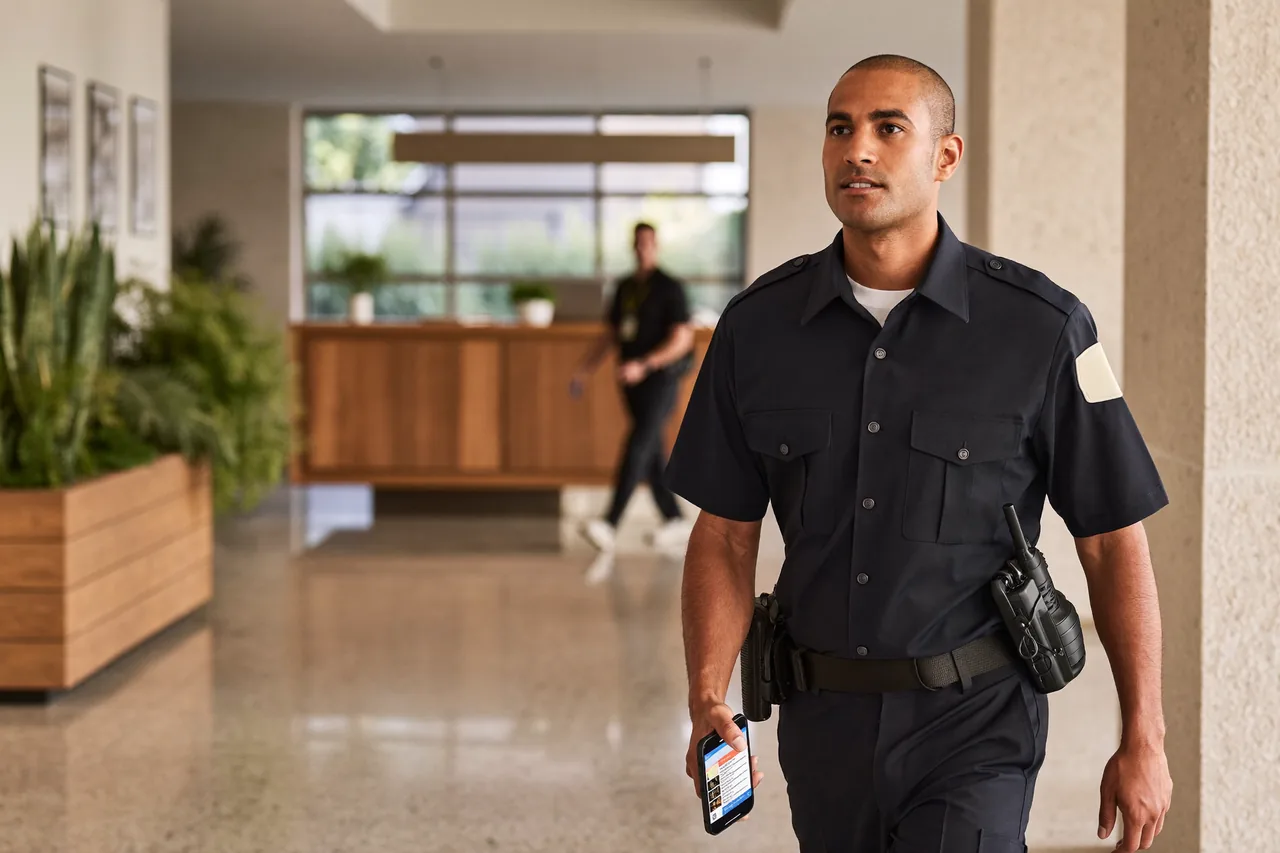
The lobby is a control point, not a reception desk
Everything that enters a commercial building on foot passes through the lobby — which makes the lobby post the highest-leverage position in the building. A professional officer there does two jobs at once: the service job (greeting tenants, directing visitors, receiving couriers) and the control job (verifying that every person heading for the elevators is someone who belongs there). Done well, tenants experience a concierge; anyone probing the building experiences a checkpoint.
Tenant and visitor access runs on rules we write into the post orders with your management team: badge and credential verification, visitor sign-in and notification, vendor and contractor check-in against approved lists, delivery handling, and after-hours access procedures that don’t depend on a tenant “knowing the guard.”
Coverage by building zone
| Zone | What the officer watches for |
|---|---|
| Lobby & entrances | Tailgating, unauthorized entry attempts, visitor management, courier and delivery control. |
| Elevators & floors | Persons on floors without a destination, propped stairwell doors, suite doors left unsecured after hours. |
| Parking garage & lots | Vehicle break-ins, loitering, unauthorized parking, escort requests, lighting failures. |
| Common areas & amenities | Restrooms, fitness rooms, conference floors — spaces open to many tenants and accountable to none. |
| Loading dock & service areas | Delivery verification, contractor access, doors that stay open longer than the delivery does. |
| Perimeter & exterior | After-hours activity at entrances, damage, graffiti, and conditions worth a work order. |
Patrols that produce a record
Between lobby duties, officers walk scheduled rounds of floors, stairwells, the garage and the perimeter — verified by electronic checkpoint scans, so patrol coverage is a documented fact rather than an assumption. Rounds surface the small things that precede big ones: a propped fire door, a camera knocked askew, a suite left open, someone sheltering in a stairwell. Everything lands in a digital daily activity report to your management office.
After hours: match the spend to the exposure
- Evening posts — an officer through the egress rush and lock-up, when the building is busiest with departures and cleaners
- Overnight standing posts — for buildings with 24/7 tenants, elevated risk, or vacancy work underway
- Mobile patrol visits — randomized documented checks and lock verification for buildings that empty at night
- Alarm response — an officer, not just a siren, answering after-hours activations
When the building changes, the exposure changes
A stable, fully-leased building and the same building mid-transition are different security problems. The transitions are where losses and liability concentrate, and post orders should change with them:
- Vacant suites — unoccupied floors attract copper theft, squatting and water damage nobody notices; rounds extend to cover them
- Tenant fit-out and construction — contractor traffic, propped doors and tool storage inside an occupied building need access discipline of their own
- Tenant move-ins and move-outs — freight elevators reserved, loading docks busy, strangers with boxes everywhere: exactly when verification matters most
- Ownership or management transitions — key audits, access-list resets and a documented security baseline for the incoming team
An extension of your property management team
Commercial security succeeds or fails on coordination with management. Our post orders are written with your property manager: escalation contacts, tenant-facing procedures, incident thresholds, and reporting format. Daily reports give the management office an operational picture of the building; incident reports give it documentation when a tenant dispute, a claim, or a lease conversation needs facts. We staff buildings for owners and managers across Worcester and Central Massachusetts — more on how we work with them at property management and commercial real estate.
Multi-building portfolio? One program can cover it — standing posts where traffic justifies them, patrol routes across the rest, and consolidated reporting. Start with a walkthrough: request a quote.
Commercial security questions
Our building has card access and cameras — why add an officer?
Systems control doors and record events; they don’t exercise judgment. The tailgater who slips in behind a badge-holder, the visitor who ignores the intercom, the dispute in the lobby, the tenant complaint about someone sleeping in the garage stairwell — every one of those needs a person. The strongest buildings run both: systems for control and evidence, an officer for judgment and response.
Can one officer cover a multi-tenant building?
Often, yes — a single well-designed post can hold a lobby, run scheduled rounds of floors and the garage, and manage visitor traffic, if the building’s size and traffic allow it. The walkthrough tells us honestly whether one post covers it or whether the building needs a second officer or a patrol layer for off-hours.
Do you report to the property manager or the tenants?
Your call, and we set it in the post orders. Most commonly, daily activity and incident reports go to property management, with tenant-facing matters — noise complaints, access disputes, deliveries — logged so the manager has the full record. We work as an extension of your management office, not around it.
What happens in the building overnight?
Whatever the risk justifies: a standing overnight post for buildings with around-the-clock tenants, or randomized mobile patrol visits with lock checks for buildings that empty out. Many properties combine an evening officer through lock-up with overnight patrol visits — continuous cost only where there’s continuous exposure.