Unarmed Security
Unarmed security officers — the workhorse of commercial security
The overwhelming majority of security work is done without a weapon: controlling who gets in, managing visitors, walking verified rounds, talking a tense situation back down, and writing it all up. That’s the job. Our unarmed officers do it well, on post orders built for your property.
Why unarmed is the right fit for most posts
Think about what actually goes wrong at a typical Worcester commercial property in a given year: a stranger wanders past reception, a door gets propped, a vendor shows up unannounced, a former employee wants to “grab some things,” a car is broken into in the back lot, an argument between two people needs an adult in the room. None of that is solved by a firearm. All of it is solved by a trained, visible officer with clear post orders and the authority to enforce them.
That’s why our default recommendation for most properties is unarmed coverage — and why we’ll steer you away from paying armed rates unless your exposure genuinely calls for them. When it does, we staff armed officers too; the comparison lives at armed vs. unarmed security.
The four disciplines of an unarmed post
- Presence — a uniformed officer where people enter, visible enough to change behavior before anything happens
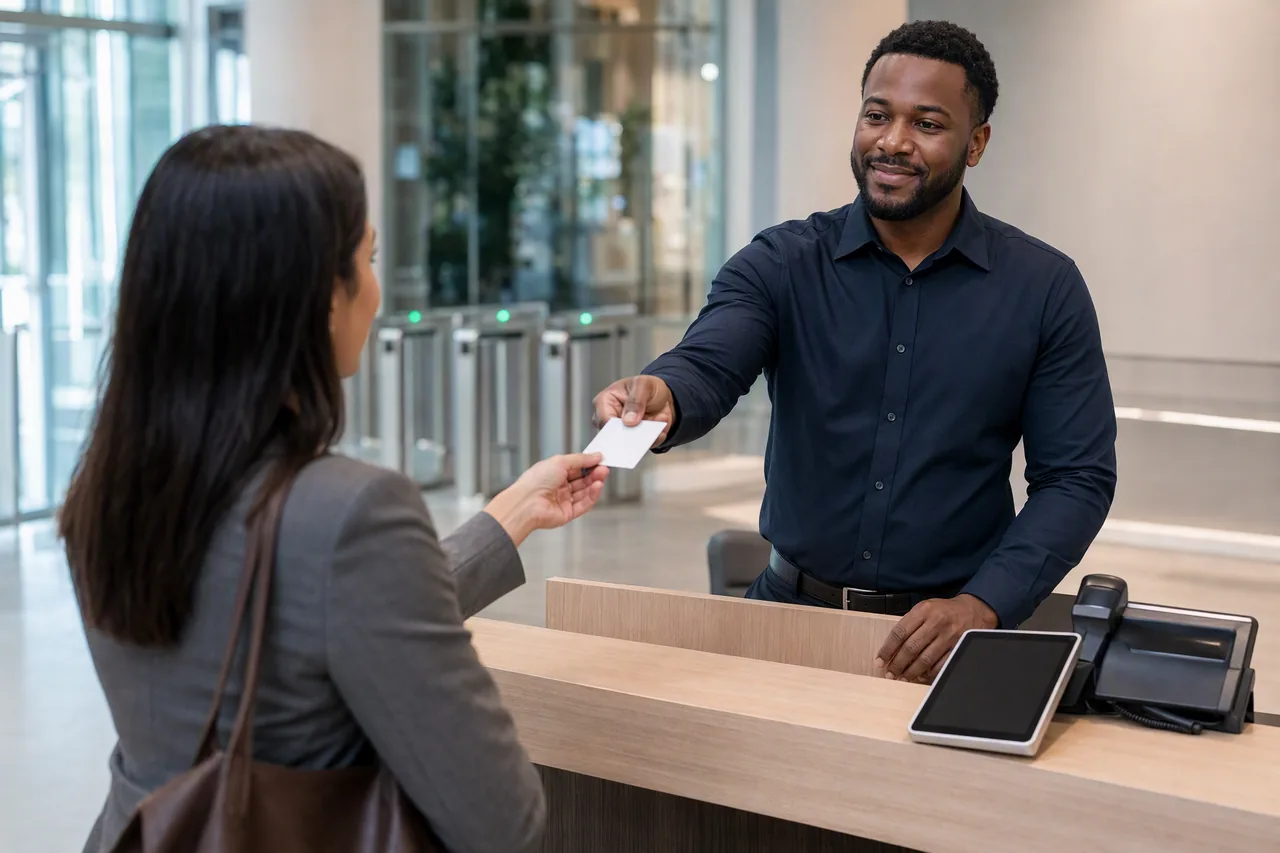
- Access control & visitor management — employees badge through, visitors sign in and get escorted where required, contractors match an approved list, and unknowns get turned around politely
- De-escalation — disputes, upset customers, unwanted persons and welfare concerns handled with calm, early conversation — the skill that prevents most incidents from ever earning the name
- Reporting — digital shift and incident reports with photos, so you know what happened on your property without asking
What a shift actually looks like
Post orders vary by property, but the rhythm of a well-run unarmed post is recognizable anywhere:
| Window | What the officer is doing |
|---|---|
| Opening | Unlock sequence, alarm disarm coordination, first exterior walk, flag anything that changed overnight before staff arrive. |
| Business hours | Desk or door presence, visitor sign-in and badging, deliveries verified and directed, scheduled interior rounds with checkpoint scans. |
| Transitions | Shift changes and lunch rushes are when doors get propped and tailgating happens — the officer works the pinch points. |
| Closing | Sweep for stragglers, secure doors and windows in sequence, confirm alarm set, log the lock-up. |
| Overnight | Randomized interior and exterior rounds, lighting and hazard checks, escalation to dispatch and your contacts on anything abnormal. |
Where our unarmed officers work
Office and lobby posts in commercial buildings, gates and laydown areas on construction sites, residential posts at apartment and condo communities, docks and gatehouses at warehouses, plus retail floors, medical facilities, schools and event venues across Worcester and Central Massachusetts. Coverage scales from a single shift to a 24/7 program.
The officer we send you
An unarmed post lives or dies on the person standing it, because their tools are judgment and communication rather than equipment. So the selection weights the traits the job actually uses:
- Temperament — steady under provocation; the officer who doesn’t take the bait is the one who ends incidents small
- Communication — comfortable talking to executives, contractors, residents and agitated strangers in the same shift
- Attention to routine — the discipline to walk round twelve as carefully as round one, checkpoint scans keeping it honest
- Writing — reports clear enough to hand to an insurer, an attorney, or a police detective without translation
- Reliability — posts covered as scheduled, with dispatch and supervision backfilling the exceptions before you feel them
The system behind the officer
An unarmed post is only as good as the structure supporting it. Every one of ours runs on site-specific post orders written before the first shift, electronic checkpoint scanning that proves rounds happened, unannounced supervisor inspections, and a 24/7 dispatch desk the officer can reach by radio at any moment. The full accountability stack is on our technology page.
Unarmed security questions
Is an unarmed guard actually an effective deterrent?
Yes — because most property crime is opportunistic. The person considering a stolen package, a propped door, a car break-in or an after-hours trespass is making a quick risk calculation, and a visible uniformed officer who controls access and walks verified rounds changes that calculation immediately. Deterrence comes from the certainty of being seen and documented, not from a weapon.
What happens if an unarmed officer faces a violent situation?
The post orders are explicit: protect people first, create distance, call police, and document. Officers are trained to de-escalate early — most incidents are defused in conversation long before they become dangerous — and to be excellent witnesses when law enforcement is needed. What they are not trained to do is play hero.
Can unarmed officers work a front desk and patrols at the same time?
On smaller properties, yes — post orders can blend a desk presence with scheduled rounds, with the desk covered by signage and phone during patrol windows. Larger buildings usually split the duties across officers. The site walkthrough determines what one post can honestly cover.
What do your unarmed officers wear?
Professional uniform by default — clearly identifiable as security, which is where the deterrent value lives. Where a property prefers a softer presence, such as a corporate lobby or residential community, a business-casual soft uniform is available. Either way, officers are identifiable and carry radio contact with our 24/7 dispatch.