Mobile Patrol
Marked vehicle patrols that make your property an unpredictable target
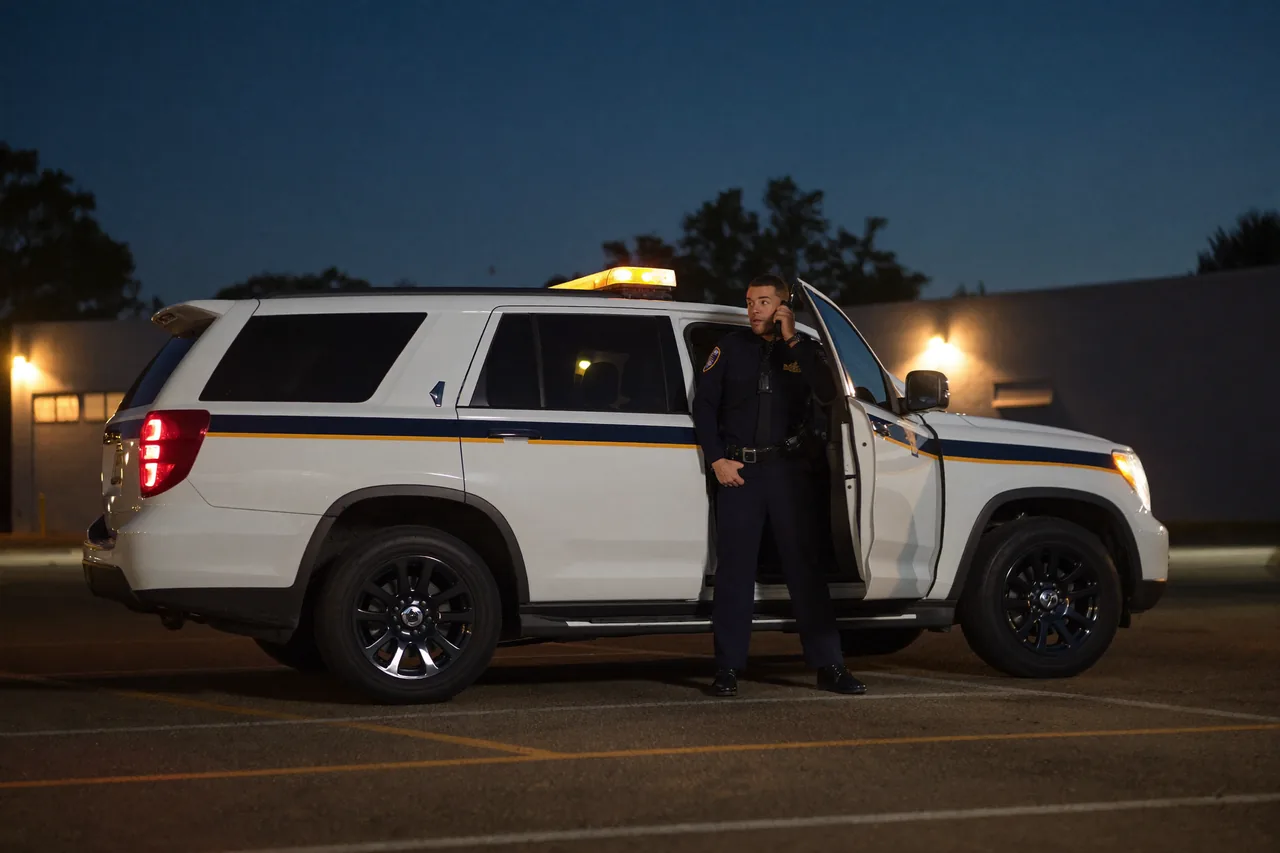
A standing guard isn’t the right spend for every property. Mobile patrol delivers what most sites actually need overnight: randomized, documented visits from a marked patrol vehicle — lock checks, exterior sweeps, and a visible deterrent that never shows up on a schedule a thief can learn.
The logic of randomized patrol
Anyone casing a property learns its rhythms fast: when the last employee leaves, when the plow comes through, when the lights go off. A patrol that arrives at the same time every night just becomes part of that rhythm. Ours don’t. Visit timing is randomized within your coverage window, so from the outside there is no pattern to learn — only the recurring fact of a marked security vehicle that could turn into the lot at any moment. For opportunistic theft, vandalism and after-hours trespass, that uncertainty is the deterrent.
What happens on a patrol visit
A visit is an inspection, not a drive-by. The officer gets out of the vehicle and works the property against a checklist built from your walkthrough:
- Physical lock checks on doors, gates, overhead doors and designated access points
- Exterior walk of the building line — broken glass, forced-entry marks, propped or tampered doors
- Parking area sweep — unauthorized vehicles logged, parking rules supported per your policy
- Perimeter and fence-line inspection where the property has one
- Lighting, hazard and property-condition reporting — the burned-out floodlight gets flagged before it becomes an entry point
- Electronic checkpoint scans at designated spots, time-stamping exactly where the officer walked
- Persons on property contacted, moved along, or escalated per your post orders
Patrol visit types we run
| Visit type | What it’s for |
|---|---|
| Overnight security checks | Randomized deterrence visits through the night — the core patrol product for offices, retail plazas and industrial sites. |
| Lock-up & opening checks | Confirm the property secured correctly at close and nothing changed before open. |
| Parking enforcement support | Documented sweeps supporting your parking rules at commercial lots and residential communities. |
| Vacant property checks | Regular documented inspections of vacant buildings and land — often an insurance expectation. |
| Alarm response | Dispatch-directed response to your intrusion alarm, layered on the patrol route. Detail: alarm response. |
The fleet and the dispatch behind it
Patrols run in marked, fuel-efficient hybrid 4x4 patrol vehicles — visible enough to deter on sight, and capable in the snow months when Central Massachusetts properties need checks the most. Every vehicle is GPS-tracked, and officers stay connected to our 24/7 dispatch desk over push-to-talk PoC radio, so a patrol officer who finds an open door or an occupied lot is never handling it alone. Dispatch escalates to your contacts and to police per your post orders.
The economics: one officer, many properties
A dedicated overnight guard is the right answer when a property needs continuous presence — and a significant line item when it doesn’t. Mobile patrol splits an officer’s night across multiple properties, which is why a patrol program costs a fraction of a standing post while still putting a uniformed officer on your site repeatedly, unpredictably, and with documentation. For property managers running portfolios across Worcester, Shrewsbury, Auburn and the surrounding towns, one patrol program can cover the whole map. The full cost comparison is here: security guard vs. mobile patrol.
Where patrol fits — and where it doesn’t
We’ll tell you plainly during the walkthrough: patrol is a deterrence and inspection layer, not a continuous one. Sites facing organized theft pressure or requiring immediate on-site intervention belong with a standing guard, or with patrol layered under monitored cameras that watch the gaps between visits. Most properties, though, don’t need a guard at 3 a.m. — they need proof someone checked the doors at 3 a.m. That’s this service.
Getting a route live
- Walkthrough. We see the property — access points, problem corners, what’s been happening — and agree on what a visit must cover.
- Checkpoint placement. Scan points go where they force the officer through the areas that matter: the rear doors, the far fence corner, the dock.
- Visit schedule. Frequency and coverage windows set to the risk — nightly, weekends-only, or seasonal — with timing randomized inside them.
- Reports begin. Documented visits from night one, and a schedule we adjust once the reports show what your property actually does after dark.
Mobile patrol questions
How many patrol visits per night do we need?
It depends on what the property is bleeding. A locked office park deterring vandalism may do well with a few randomized visits; a site with active theft pressure usually wants more frequent passes, or a patrol program layered with monitored cameras. We build the visit schedule around the risk during the walkthrough — and adjust it once the reports start showing what’s actually happening overnight.
How do we know the visits actually happened?
Every visit is GPS-tracked at the vehicle level and verified with electronic checkpoint scans at designated points on your property. You receive documented reports with time stamps and photos. You’re never taking anyone’s word for it — the record stands on its own.
Is mobile patrol enough on its own, or do we need a standing guard?
Mobile patrol is a deterrence and inspection tool — it makes your property an unpredictable target and catches problems between visits’ bookends. It is not continuous presence. If your risk involves confrontation, active theft in progress, or anything requiring someone on site every minute, that’s a standing post. Many properties land on a hybrid: patrol visits most nights, a dedicated officer during peak-risk windows. See the comparison.
Can patrol officers respond to our burglar alarm?
Yes — alarm response is a natural add-on to a patrol route. When your alarm activates, dispatch sends the patrol officer to check the property, verify or clear the activation, secure what can be secured, and coordinate with your keyholder and police as needed, with a documented report to follow.